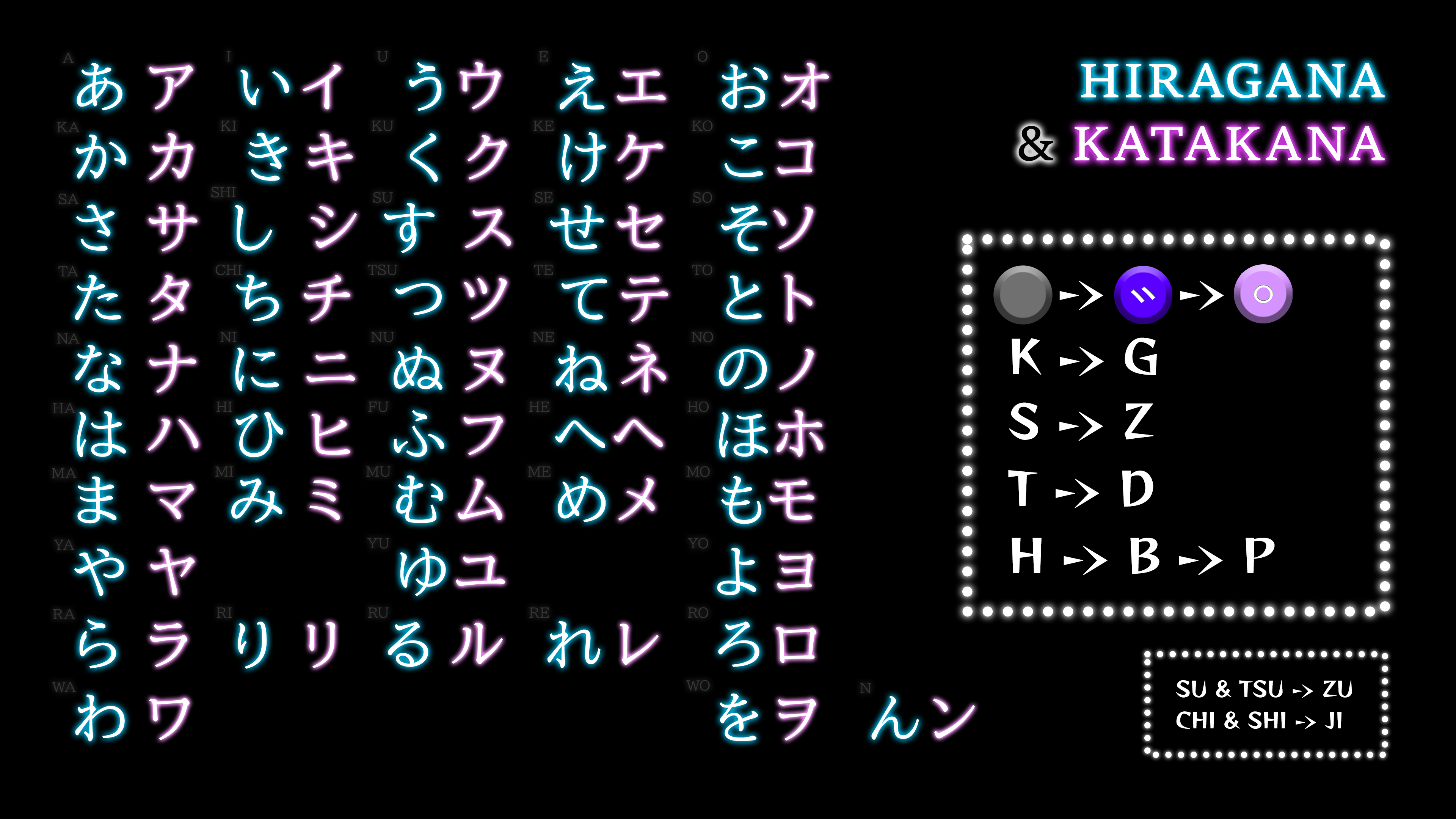
Japanese Syllabary Cheatsheet
Remember learning to write as a kid? You didn't tackle print letters one year and cursive the next—you learned them side by side (that's how we did it in Mexico 15 years ago), seeing how they were just two ways to express the same letters. That's the lightbulb moment that transformed my Japanese learning, and it's going to save you from months of banging your head against the wall.
I spent my first two weeks learning Japanese the "traditional" way—mastering all 46 hiragana characters before even looking at katakana. Big mistake. By the time I started katakana, I was already mixing up similar hiragana characters, and now I had 46 more symbols that looked frustratingly similar but completely different. Sound familiar?
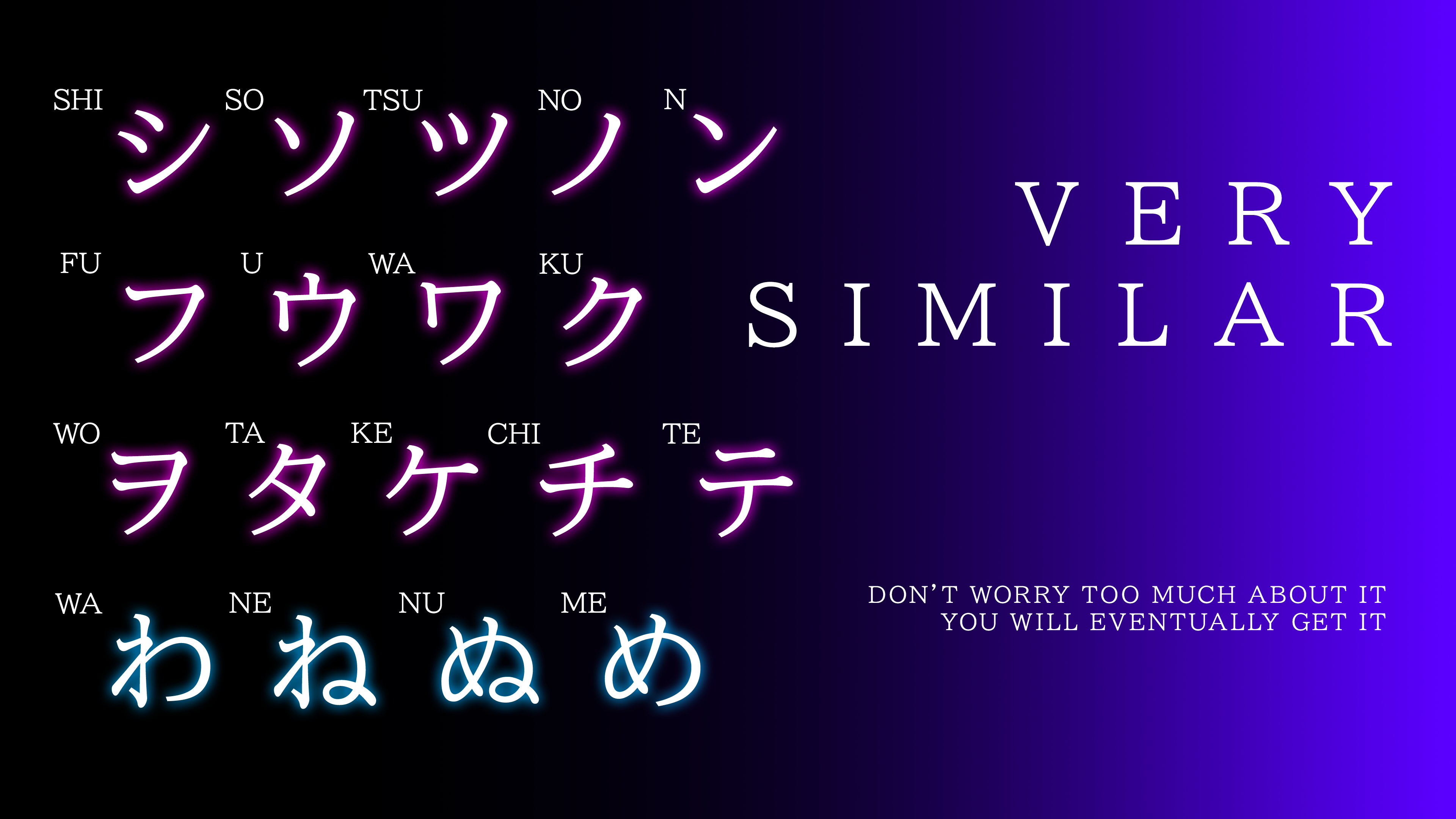
Meet your enemy
The result of this separation is that Katakana will always be a pain point, even kanji is easier compared to it. Lack of frequency doesn't contribute.
But here's the trick—hiragana and katakana aren't two alphabets. They're more like two fonts for the same sounds. Once I realized this, everything changed.
The Game-Changing Mindset Shift
Let me blow your mind with something that took me way too long to understand: Japanese doesn't have alphabets. It has syllabaries. Each character represents a complete sound, and that sound never changes. The character か always sounds like "ka"—whether it's in hiragana or its angular katakana cousin カ.
Think of it this way: hiragana is like your everyday handwriting—smooth, flowing, used for native Japanese words. Katakana? That's your CAPS LOCK—angular, attention-grabbing, perfect for foreign words and emphasis. You wouldn't learn lowercase letters without capitals, would you?
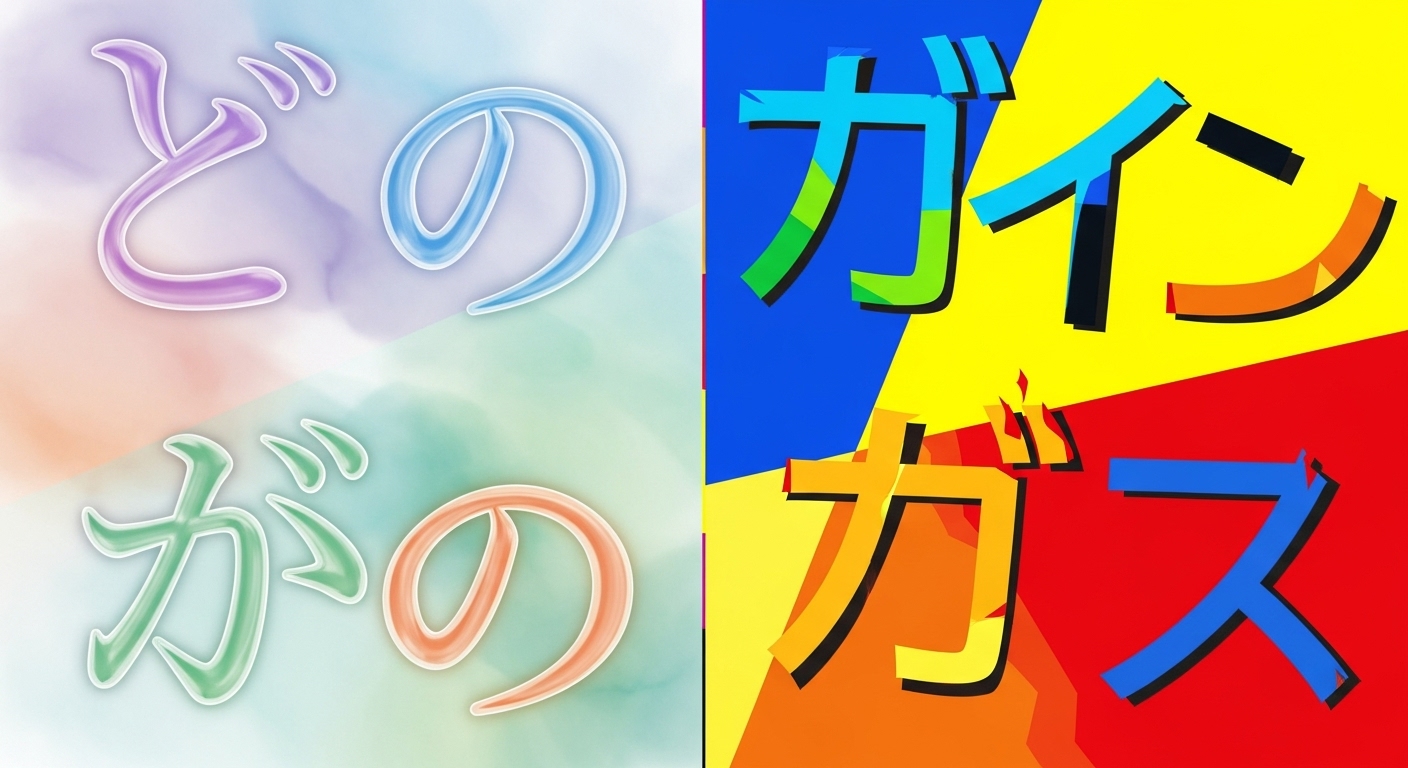
Smoth vs Sharp
Here's what really sealed the deal for me: katakana words are often easier for beginners. Why? Because they're mostly borrowed from English! コーヒー (koohii) is coffee. ソファ (sofa) is... well, sofa. スマートフォン (sumaatofon) is smartphone. You're essentially reading English with a Japanese accent.
The Wave Method That Changed Everything
I discovered this approach almost by accident, inspired by—don't laugh—Plants vs. Zombies. You know how the game introduces new zombies in waves, gradually increasing difficulty? That's exactly how I structured my kana learning.
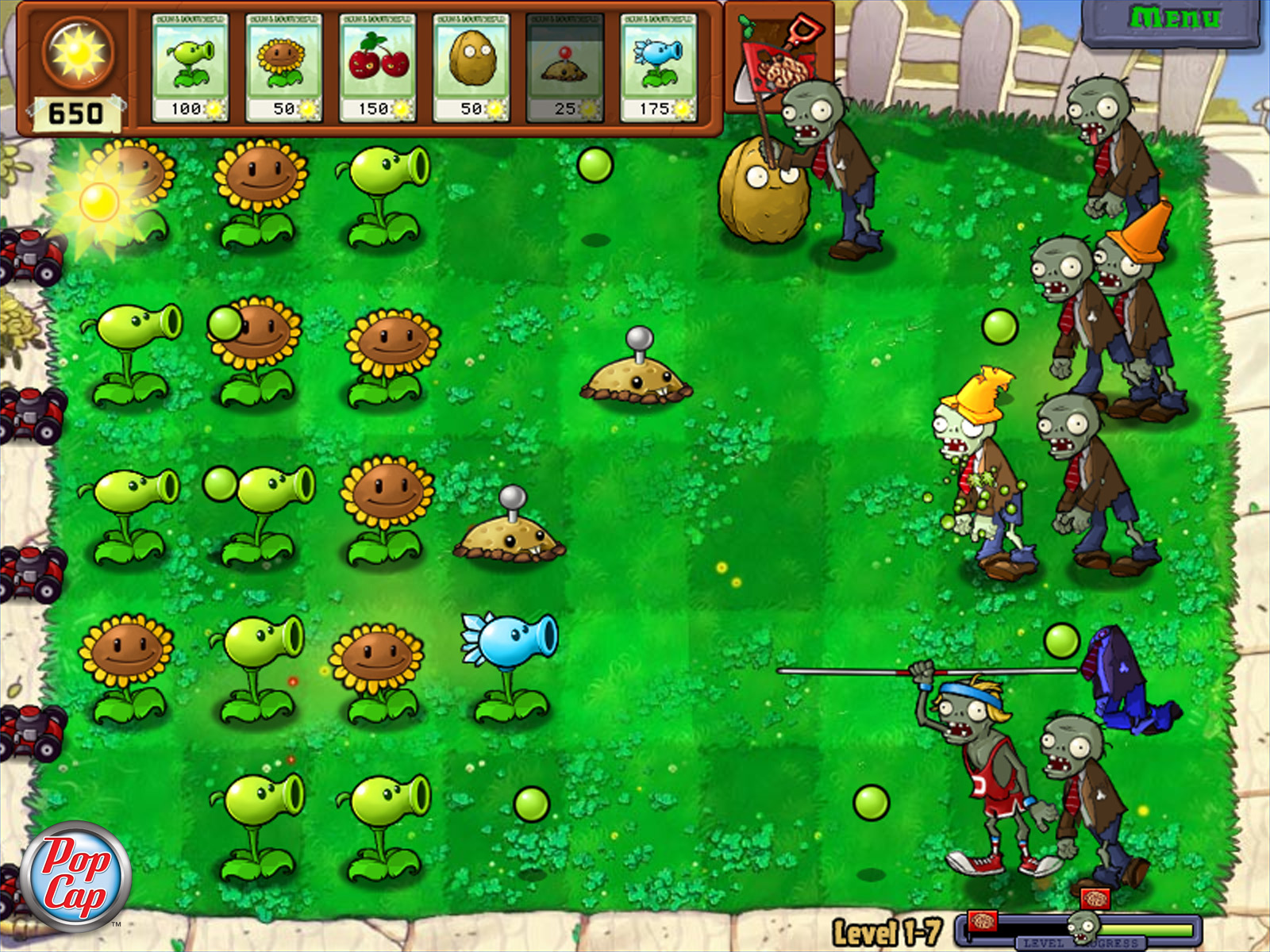
Instead of cramming all 46 hiragana, then all 46 katakana, I created mixed waves:
- Wave 1: あ/ア, い/イ, う/ウ, え/エ, お/オ (the vowels in both scripts)
- Wave 2: か/カ row + さ/サ row
- Wave 3: た/タ row + な/ナ row
- And so on...
The magic? You're learning the sound system, not memorizing random symbols. When you see か and カ together, your brain immediately connects them as the same sound in different "fonts."
My Battle-Tested Learning Techniques
The Two-Strike Rule
This one's simple but powerful. For each character, I had to get it right twice in a row before moving on. Miss it once? Back to zero for that character. It sounds harsh, but it ensures you actually know it, not just got lucky.
The 3-Second Challenge
Once you think you know a character, you should recognize it in 3 seconds max. Any longer and you're not ready for real-world reading. I'd set a timer and blast through flashcards. Can't hit 3 seconds? That character goes back in the practice pile.
50 Characters and their variations is, to be fair, a small number, we don't need advanced SRS. You can't run from the kana, that's your repetition
The Bathroom Break Method
I'm not kidding—some of my best learning happened during bathroom breaks. Five minutes here, three minutes there. The key is spaced repetition, not marathon sessions. Your brain needs time to process, and those small moments add up faster than you think.

The Physical Connection
When I hit a stubborn character that wouldn't stick, I'd trace it in the air with my finger or write it down. There's something about the physical motion that creates a stronger memory link. Try it—especially for those tricky similar-looking pairs.
Mastering the Advanced Elements
After nailing the basics, you'll encounter what I call the "boss levels" of kana:
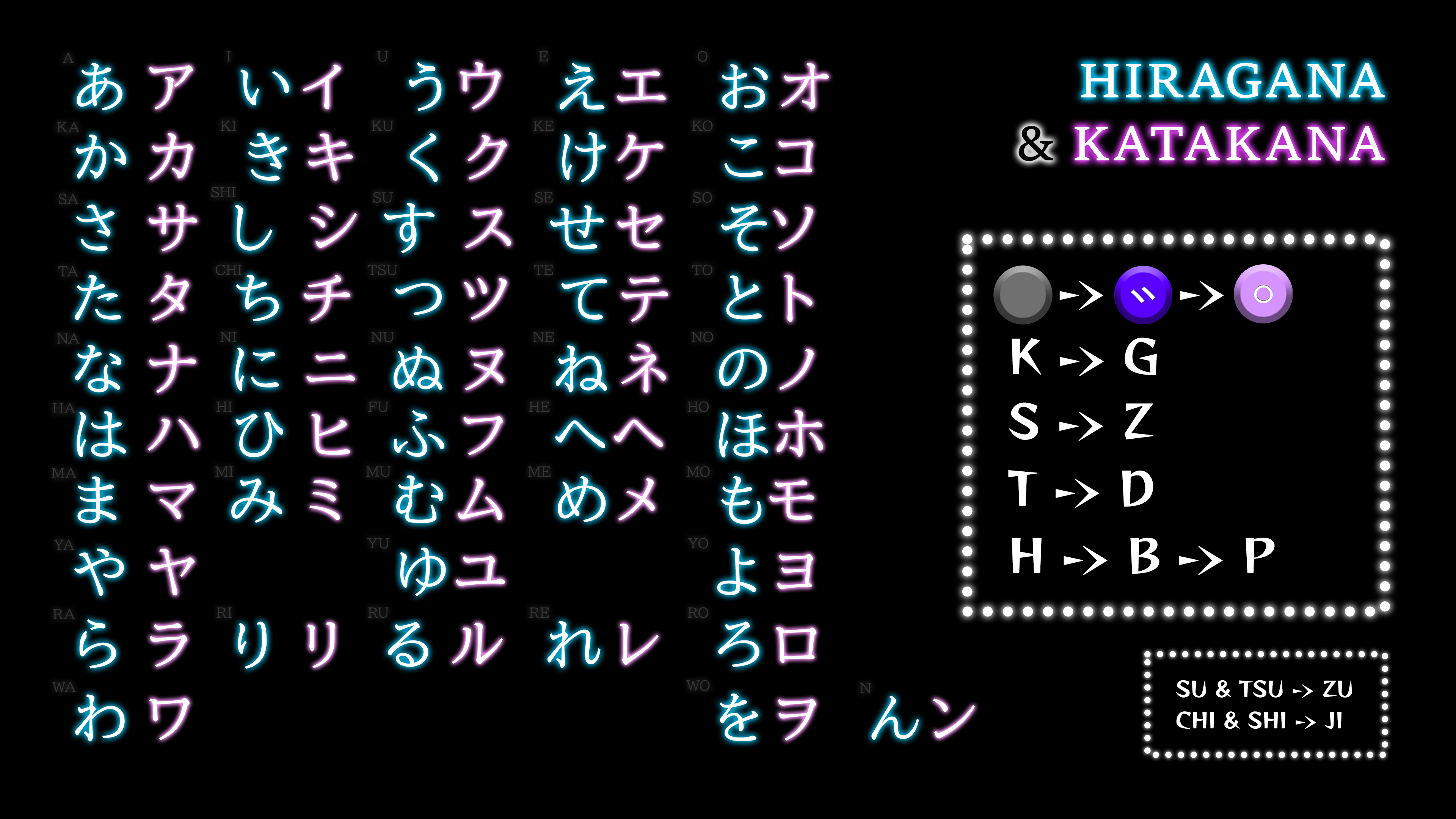
(check the box at the right)
Compound Sounds (きょ, きゅ, きゃ)
See that tiny よ, ゆ, or や? It's not decorative—it changes the sound completely. き (ki) becomes きょ (kyo). Think of it as the character doing a fusion dance with the small kana. Once you get this pattern, you've just unlocked dozens of new sounds.
The Power-Up Marks (Dakuten & Handakuten)
Those little marks that look like quotation marks? I think of them as level-up indicators. か (ka) gets two marks and becomes が (ga). It's literally the same character, just "powered up" to a voiced version. は (ha) with a circle becomes ぱ (pa)—like it went Super.
The Pause Button (Small っ)
This tiny つ doesn't make a sound—it creates a pause. It's like a musical rest. がっこう (gakkou - school) has that little pause that makes it sound more authentic. Miss it, and you'll sound like a robot reading Japanese.
Pro tip: は sounds like 'wa' when used as a particle, and を sounds like 'o' in sentences. Don't stress about why yet—just remember these exceptions exist.— Every Japanese Learner's Mantra
The Tool That Made It All Click
I got so frustrated with existing apps treating hiragana and katakana separately that I built my own. LearnTheKana.vercel.app implements this exact wave-based method. It's free, open-source, and designed specifically for simultaneous learning.
I actually made a video about all this
The app tracks your progress through waves, enforces the two-strike rule, and even has a speed mode for the 3-second challenge. But honestly? You could use index cards and get the same results. The method matters more than the tool.
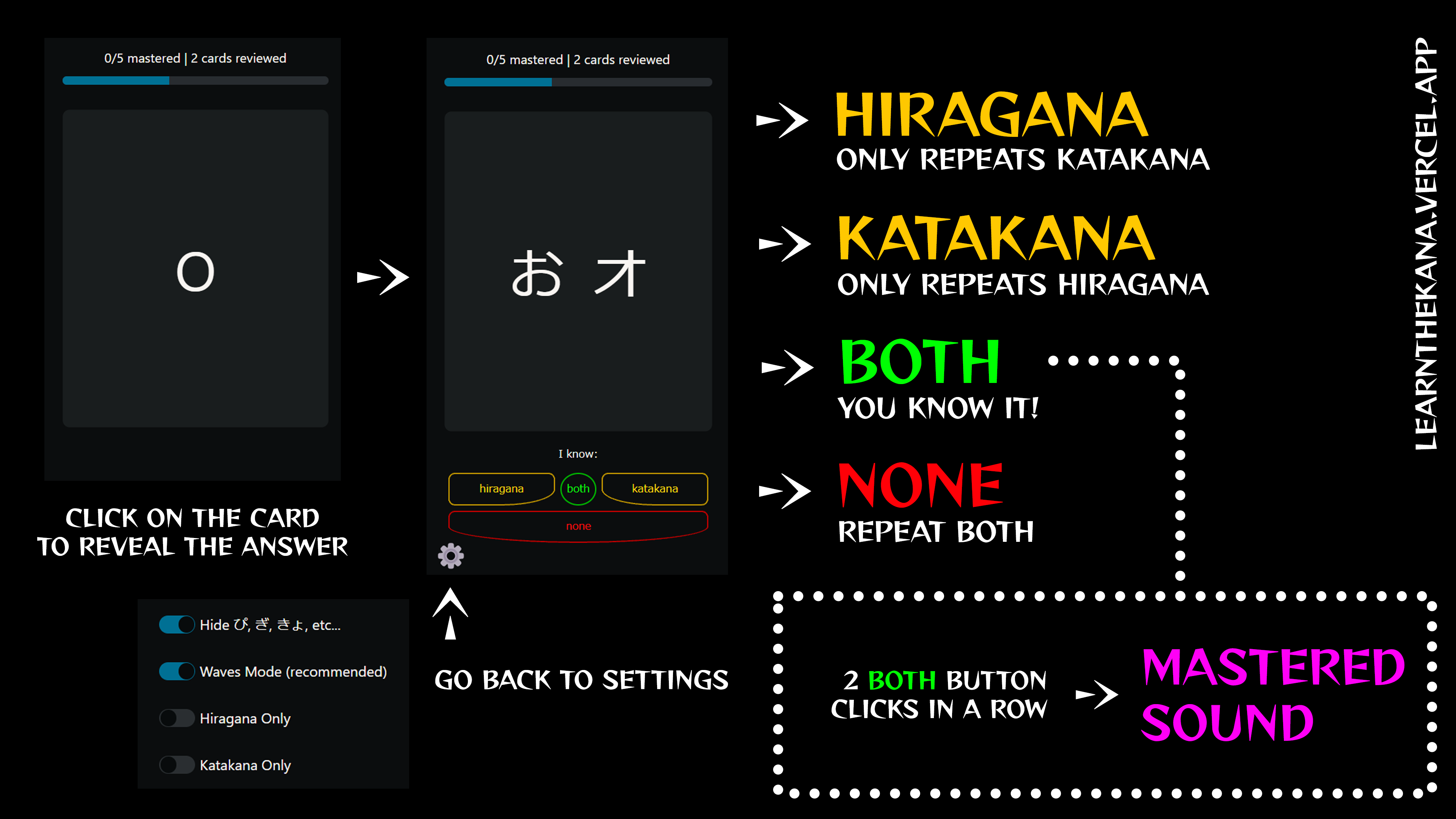
Learn The Kana Web App
Your Next Steps
Ready to test if you've truly mastered kana? Here's my final boss challenge: disable any hints or wave mode and try reading through all 92 basic kana characters (both scripts) in under 5 minutes. That's about 3 seconds per character. If you can do that, congratulations—you're ready for vocabulary and kanji.
But here's the real test: go find a Japanese website or manga. You'll be shocked at how much katakana pops up everywhere. Menu items, sound effects, foreign names—suddenly, you can read them all. That feeling when you realize you can read カレーライス (curry rice) on a menu? That's when you know the method worked.
Look, learning Japanese is a marathon, not a sprint. But starting with this simultaneous approach? It's like beginning the race already warmed up. You're not learning two separate systems—you're learning one sound system with two expressions.
This will give you benefits in the long run
So here's my challenge to you: forget everything you've heard about learning hiragana first. Grab some flashcards (or fire up that app), group your characters into waves, and start learning them together. Your future Japanese-reading self will thank you.
Got questions about the wave method? Stuck on some similar-looking characters? Drop a comment below—I love helping fellow learners crack the kana code. And if you try the simultaneous approach, let me know how it goes. I have a feeling you'll be as amazed as I was.
頑張って! (That's "ganbatte"—good luck—in hiragana, in case you're wondering. See? You're already learning!)

Pablo Dominguez
Full Stack Developer passionate about building interesting projects and learning new skills.